
The cultural impact of Professor Moriarty should be studied in a lab. When you consider his place as one of the world’s most iconic villains, firm in the public consciousness over a century after his inception, you’d be forgiven for thinking his debut was some sixty-chapter epic, a prolonged battle between Sherlock Holmes and the Napoleon of Crime.
In truth, Moriarty’s debut, The Final Problem, clocks in below eight thousand words, among the shortest in Conan Doyles’ canon. The story’s narrator, Dr Watson, lays eyes on the villain only once, through the window of a retreating train. Moriarty speaks in only a single scene, and he ends his inaugural story tumbling to his death into the Reichenbach Falls.
Yet, it was this brief appearance that galvanised Professor Moriarty as the archetypal villain of the age. When I began to write my novel, The Return of Moriarty, which imagines the great nemesis survived his final battle, I sat down with the question, what is it that made this character so powerful in such a short time?
Some answers to this question are broadly replicable, methods that anyone can apply to their writing. However, one aspect of Moriarty’s villainy is far more personal, and far less simple for an author to imitate.
A huge benefit, of course, is Sir Arthur Conan Doyle’s skill at writing villains. In fact, Moriarty’s introduction delivers several valuable lessons on the subject.
We learn that a villain should never advocate for themselves. In The Final Problem, everything we learn about the enigmatic Professor comes from Sherlock’s own testimony. To hear Holmes, who we have marvelled at for over twenty-three adventures at this point, speak so highly of this particular enemy, says more than James Moriarty ever could.
We learn to introduce a villain by their effects. Holmes arrives to us already injured, barely escaping from speeding carriages, falling bricks and skulking rogues. James Moriarty spends the novel as an unseen force of nature, turning Holmes’ beloved city against him, a shadow that follows across the continent.
Beyond mere craft, however, lies a deeper factor which contributed to James Moriarty’s prestige in the annals of villainy; the fact Sir Arthur Conan Doyle sincerely wished to end Sherlock Holmes.
Most villains are written into a story to test their enemies, to put up a fight and eventually be vanquished. It is rare that an author creates a villain, with the genuine purpose of bringing about their hero’s end.
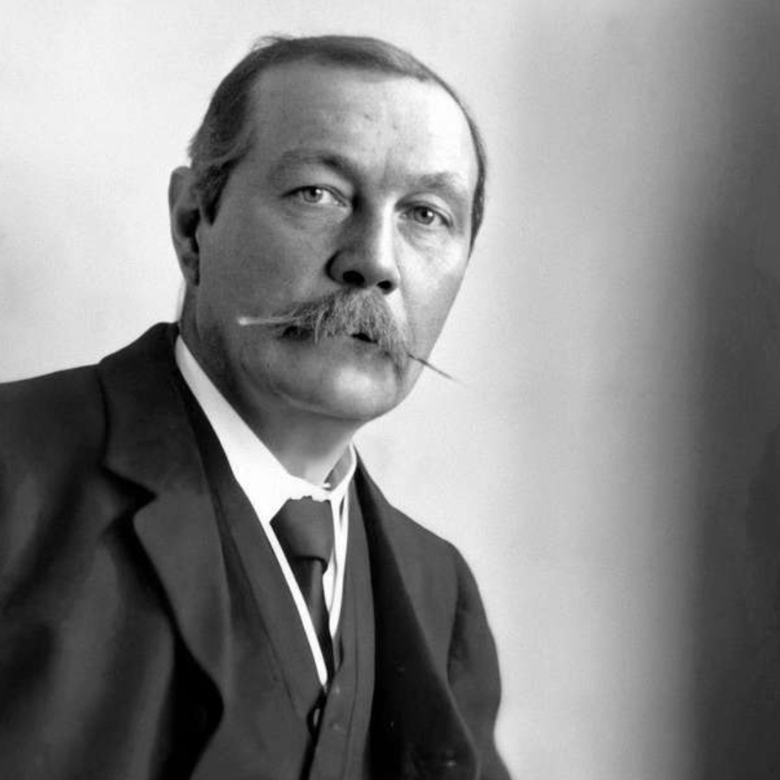
Sir Arthur Conan Doyle had a complex relationship with his most popular creation, admiring Holmes, whilst also feeling creatively trapped by the character. “I think of slaying Holmes” Doyle wrote to his mother in 1891, “winding him up for good & all.”
One can almost read it in the words of The Final Problem. Watson begins with a firm statement, that this will be the last he shall ever write on the subject of Sherlock Holmes. Holmes himself, speaks of retirement and that this final case, if suitably concluded, would be considered the peak of all his exploits.
In a speech in 1896, Doyle said “I have been much blamed for doing that gentleman to death but I hold that it was not murder but justifiable homicide in self-defence… since if I had not killed him he would certainly have killed me”.
James Moriarty was Doyle’s instrument in this justifiable homicide. While we are blessed with a century of hindsight, safe in the knowledge that Holmes would rise again, to the reading public, Holmes would stay dead for ten long years.
This is the facet of James Moriarty that very few can replicate, a villain so powerful that he ends the very universe in which he appears. Despite it costing his life, the killing of Sherlock Holmes is, perhaps, the most successful act of villainy in literary history.
I’ve sometimes joked that The Final Problem qualifies as apocalyptic fiction. In a way, Moriarty represents a fearsome authorial shadow, the embodiment of Sir Arthur Conan Doyle’s own discontent, a destructive force created to end one of the most popular literary universes in a manner that shocked the world.
Moriarty would eventually find himself foiled again. In The Adventure of The Empty House, Holmes reveals that he never went into the Reichenbach Falls, that he overwhelmed Professor Moriarty, and in many ways Doyle himself, by applying the English martial art of Baritsu.
From there, Sir Arthur Conan Doyle brought back Holmes with a vengeance, until the public had spent more time with the detective after his death than before it.
One would think such a resurrection would diminish Moriarty’s effect. In a parallel act of creative murder, where the comic book character Superman was publicly killed and then resurrected, a discontented fanbase maligned the lack of lasting consequences. Many believed that, by diminishing the permanence of a character’s demise, The Death of Superman only served to “kill death”.
Yet Moriarty endures anyway, due to the mastery of his characterisation, and because of the simple truth, spelled out over a decade of public outcry, that Doyle never intended Moriarty’s victim to return.
Though I did always wonder what would have happened, if the events at Reichenbach had proved permanent, and especially if James Moriarty had survived to live in the aftermath, of a world without its hero.
Would the great villain corrupt it even further, after stealing away its central character?
Or would the Professor be himself changed by the world he finds himself in, a world which, before his arrival, tended towards order, and justice, and men of good conscience winning the day.
One thing is certain, in part due to his incredible talent, and in part due to his complex relationship with his own hero, Sir Arthur Conan Doyle created one of the most impactful villains in all of literature, a villain who inspired countless homages and millions of writers.
And, hopefully, a character with a something more left to say.
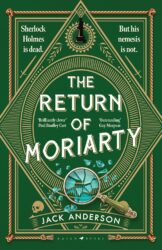
The Return of Moriarty by Jack Anderson is published by Bloomsbury.