
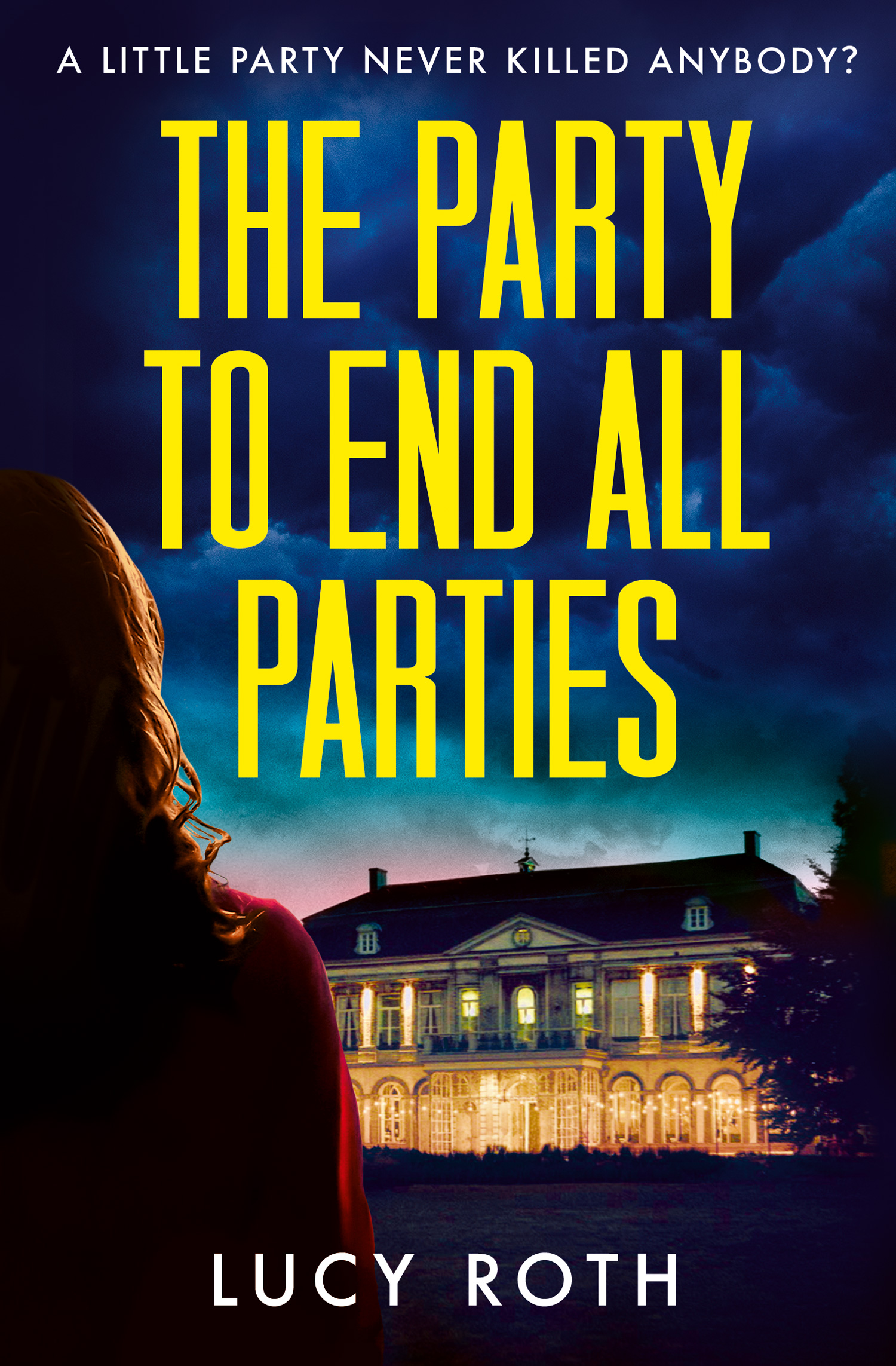
There’s long been a debate around whether our main characters must be likeable to ensure readers can relate (and no doubt to encourage more positive reviews). However, when I think back to the books, movies and TV shows I’ve most enjoyed, they all too often centre around unlikeable or, at the very least, morally grey, characters.

I agree that we need to care what happens to our characters. But perhaps sometimes we can care that something bad happens to them – that they get their comeuppance. I mean, we all have revenge fantasies after all. It’s human nature.
That’s why I wrote a family that is, on the whole, utterly despicable. Entitled, snobbish and frivolous, the Morland family can’t even be loyal to one another, never mind anyone else.
It was thinking about the TV show Succession that really inspired me to write the Morlands. I love the sibling rivalry that tears everyone apart in that show when the father, Logan Roy, toys with each of his ‘kids’ letting them think they’ll be the one to inherit the global media business.
Now, being brought up by a rich, entitled narcissist, the Roy kids of Succession are pretty entitled and narcissistic themselves, and yet I found myself weirdly rooting for them – and changing allegiance between episodes.
Because while people can be unlikeable, there are often vulnerabilities to them that can conjure occasional feelings of compassion and relatability. If we can write them in a way that allows us to understand their behaviour, we stand more chance of caring about them in some way. And that’s what I tried to do with the Morland siblings.
In The Party to End All Parties, Kassie, the youngest, is the most grounded of the Morland siblings. Indeed, as we move through the ages of the siblings from youngest to oldest, they just get worse and worse. Paul, the second youngest, is a wild, reckless and snobbish bloke, yet he has an annoying inner voice that tries to keep his morals on track – so there’s something in there. He can also be quite vulnerable to his confusing feelings. But the eldest two, Caitlin and Steven, are almost psychopathic – charming and narcissistic with no compassion for anyone (although we do learn why Caitlin puts the barriers up).
If you throw these four siblings, with questionable morals, together, and give them a shared goal (being named the sole inheritor of the Morland family estate in this instance) their callous traits will come to the fore – and that creates a lot of fun for me as author (and hopefully for the reader too).
To make the siblings even more of a risky proposition as they gear up to fight tooth and nail for the estate, I also threw in lots of drugs and alcohol too, and set the story around a huge party. This – and indeed the book as a whole – was inspired by my visit to the National Trust’s Seaton Delaval Hall in Northumberland (which I visited with my good friend Kassie, hence me naming the main – and most likeable – protagonist Kassie). Seaton Delaval Hall is a fabulous building set in stunning grounds, but even more fascinating is the Delaval family history. The Delaval siblings, who owned the estate for approximately 700 years until the mid 1800s, were themselves renowned for throwing legendary parties and playing tricks on their guests (the Hall’s ‘upside-down room’ featuring furniture attached to the ceiling is a reconstruction of their original upside-down room, in which they would place inebriated guests during their parties. The guests would, understandably, awaken feeling utterly disorientated and confused).
So, this mischievous, flamboyant and slightly reckless family inspired my Morland siblings – although they are based in the present day, are pretty narcissistic and, in many respects, criminal! So I should make clear that their characters are not based on the Delavals – just their flamboyancy and tendency to throw legendary three-day parties.
Of course, I don’t believe any character should be wholly bad (although Steven may well be!) I’ve therefore delved into why the siblings might behave in the ways they do by looking into their family history. The loss of their mother from a young age, their stern and terrifying grandmother and past traumas that come to the surface. Of course, privilege also impacts the siblings and the way in which they behave, which is probably why they can get away with corrupt and criminal acts (as we know the rich and powerful often do).
When sibling rivalry, narcissism and a strong sense of entitlement combine – with a dead body thrown into the mix for the family to contend with (a major inconvenience as Granny’s sending the inspection team over to the estate the following day) the siblings are going to implode. There was only ever going to be one winner, thanks to Granny’s manipulative games and refusal to share the estate fairly, so watching these terribly entitled sisters and brothers bring each other down is, I’m told by an early reviewer ‘a joy to watch’. After all, living in a world where money and privilege allow so many in power to get away with murder, it’s probably quite cathartic to imagine what would happen if you redressed the balance a little.
The Party to End All Parties, as with many stories with unlikeable characters, is probably going to be a little marmitey. I imagine readers will either hate hanging out with the Morlands or enjoy watching them all fall apart (eat the rich springs to mind). And, as we’ve seen playing out between influential accounts on social media in real life, when the going gets tough, the privileged and powerful will often throw each other under the bus to save their own skin. And that, as far as I’m concerned, at least gives us a little pleasure in this modern and corrupt world we are all living in.
The Party to End All Parties is published by Avon, 9th April.