
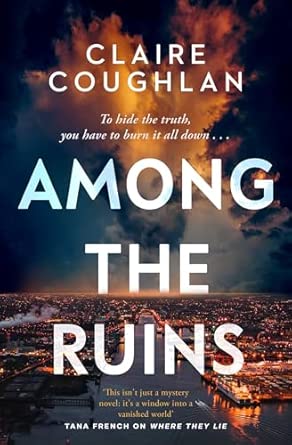
Dublin in the summer of 1970 is the backdrop for my new mystery novel, Among the Ruins. It’s a sequel to my debut, Where They Lie, which was set just eighteen months before in the winter of 1968. Although I wasn’t born until the summer of 1981 – just days before then Prince Charles married Lady Diana Spencer; and days after Irish republican prisoner Joe McDonnell died after his 61 days on hunger strike – reimagining Dublin in the 1970s wasn’t too much of a stretch imaginatively speaking. I lived in Dublin’s north inner city for ten years in my twenties and thirties and walked everywhere, because Dublin is a walkable town, perfect for an amateur gumshoe like Nicoletta, my journalist-as-detective. Like Nicoletta’s, my feet instinctively know their way around. That’s no surprise to any native Dubliner. The cityscape itself hasn’t changed too dramatically; it’s still a heaving mix of faded grandeur, low-rise sprawl and unexpected one-way streets. Back then, in the summer of 1970, it was still a fairly monocultural city, and Nicoletta’s Italian surname – Sarto – invites questions about her background from those she is trying to get answers from as she gathers her story. She’s more than happy to pay the quid pro quo of social niceties if it gets people talking, and as long as it translates into the cold, hard currency she trades in, which is information. If being of Italian extraction was considered exotic in Dublin of 1970, then it was a city on the brink of change, though the swinging sixties hadn’t yet happened there, nor would it until the economic boom of the Celtic Tiger years in the late 1990s.
There was a significant nurses’ strike in Dublin in 1970, with the native workforce suffering a ‘brain drain’ as the result of emigration, the mass exodus of young people abroad, as many nurses opted to train and/or work in Britain. This shortage in nursing staff fed into one of my subplots, as Nicoletta knocks on doors to find out what happened to an elderly woman’s paid carer, Barbara Highfield, who has gone missing, along with a valuable painting, part of a diptych titled Among the Ruins. Barbara’s patient, Helen Leonard, has also died and left everything to her. Was there foul play? Where is the painting? And does Barbara Highfield actually exist?
This was a Dublin where outward respectability, and domestic duty, was everything, especially for women. Divorce was illegal, as was contraception. The marriage bar was in place, which required women in the civil service, and many public and private sector jobs, to resign upon marriage. Mother and baby homes, Magdalene Laundries and industrial schools were in operation, and the Catholic Church was deferred to on many, if not all, matters – both domestic and social.
Activist groups like The Irish Women’s Liberation Movement, led by professional women, many journalists, campaigned to repeal the draconian contraception laws. Research I did on the work of these women provided the seed of inspiration for the committee Nicoletta joins in Among the Ruins, though – typically for her – she gets so caught up in the story of Barbara Highfield and the missing painting that she forgets to attend another meeting.
Each of my characters faces challenges posed by the restrictions of living in that time. Nicoletta is the mother to new-born twins, yet she longs to return to the structure and stimulus of her job as the newly appointed women’s pages editor at the Irish Sentinel, a fictional newspaper based at Burgh Quay, where the former Irish Press newspapers were located. When Nicoletta finally does resume her job at the Sentinel, it is much to the disapproval of those around her, including her fiancé, Barney, who is also a colleague.
Silence permeates Nicoletta’s intimate relationships. To speak candidly to those around her would be dangerous. She can’t give voice to her concerns about motherhood, because it wasn’t the done thing, to verbalise the unsayable; feelings like hers might have been seen as unnatural. Barney, content with the status quo, doesn’t want to hear. Yet his young son, Liam, from his marriage to the oft talked about, but never seen, Marie, is drifting further and further away from his father, to which Barney is completely oblivious. Other colleagues like Dermot, a gay man living in a country where the threat of being outed was very real – homosexuality wasn’t decriminalised until 1993 – has a whole secret life that his close friends choose not to notice, until it’s too late.
Garda Peter O’Connor, who appeared in my debut, Where They Lie, and has a much bigger role to play in Among the Ruins, is a decent man trying to do the right thing against the backdrop of The Troubles and political strife. He is involved in surveillance of The Rook, aka Ray Hall, a Dublin born-bred-and-buttered career criminal, who specialises in robbing stately homes and then setting fire to them. The Rook has been tried and acquitted of killing a Garda. But does he have the missing painting? Nicoletta certainly seems to think so…
Dublin in 1970 was a place where olive oil was something you bought at the chemist’s – food tended towards the beige end of the colour spectrum, and pineapple and bacon on toast was a delicacy considered the height of sophistication. Writing about this period felt as though there was a complete remove from Ireland in 2026, yet it is still recognisable enough to be within living memory for many people.
However, Dublin was still a vibrant city in 1970. Sure, communities were tight-knit and tight-lipped. But people knew how to enjoy themselves then; the city centre was alive, unlike now. There was a bustling culture of cinema attendance, dancehalls, music, theatre and literature.
I hope Among the Ruins is an immersive and transporting read, yet I am loath to say that now is better than then. Because, of course, how would I know? Then, as now, people can only live their lives within the constraints of their times.
Among The Ruins by Claire Coughlan (Simon & Schuster UK) is out in hardback, ebook and audio on 23 April