
What made you decide to write historical crime fiction?
I’ve written fiction on and off for many years. As a writer who has written a lot of non-fiction – both books and journalism – I often find myself asking the questions that fiction writers seek to ask about the people and events I’ve written about. How did Philip II of Spain actually feel when he was alone in the study, suffering from agonizing gout and exhaustion as he worked through the endless paperwork that poured in from all corners of the Spanish empire? What did Sofia Perovskaya and Andrei Zheliabov – the leaders of the terrorist cell that assassinated Tsar Alexander II – say to each other in bed as they plotted a regicide that they knew would result in their own execution? What was going through William Tecumseh Sherman’s mind when he had his nervous breakdown in Kentucky in the first months of the American Civil War? To answer these questions, you can’t just rely on the documents – you have to use your imagination.
Tell us about the Mendoza novels.
The first novel The Devils of Cardona was published in 2016. At that time, I was working on a book about Sherman’s march through Georgia, when I decided to try my hand at historical crime fiction. I set the novel in sixteenth century Spain, because this was a period I knew well after writing Blood and Faith:The Purging of Muslim Spain (2009). From time to time, I had thought of writing a novel about that period, which has so many eerie parallels to the present.
I wrote DEVILS with very specific objectives. I wanted to bring this period of history to the attention of readers who might not be aware of it, and have a serious discussion about religious persecution and the persecution of minorities, about tolerance and intolerance, coexistence and violence. I also wanted this journey to be entertaining. I wanted swordfights, battles, mysteries and chases; protagonists who readers could get behind, and villains whose downfall they would root for. My agent liked the early results, and encouraged me to continue, and I did.
That novel was well-received, but the sequel has been a long time coming.
It was. Until Sharpe Books picked it up this year, DEVILS was only published in the US, which limited its audience. I always intended that book to be the first of a series, and the delay is partly explained by the fact that my American publishing company did not want to publish a series, and other companies also deferred. And so the sequel languished on my computer, until Sharpe Books accepted it. Now, I’m very pleased to see it out there at last, and I hope to continue the series, and continue the character arc that I had always envisaged.
Tell us about The Emperor of Seville.
DEVILS was set mostly in and around a small village in the Pyrenees, and was very much a rural novel. EMPEROR takes place almost entirely in Seville – a city so synonymous with vice and criminality that that sixteenth century Spaniards called it ‘the Great Babylon’ or simply, Babilonia. This was a city of wild extremes – opulence and poverty, piety and criminality, which the law enforcement agencies were barely able to contain. I’ve tried to show the city in all its gaudy sinfulness and corruption, in a story of murder and corruption, sex and gangsterism.
Like the first book, EMPEROR has real characters, including Philip II and Miguel de Cervantes. At the beginning of the book, Cervantes asks the investigating magistrate Bernardo de Mendoza, ‘if you had to choose between the law and justice, what would you choose.’ In a city where justice is often absent, Mendoza is forced to answer this question, as he struggles to unravel a series of murders in which the Spanish crown may or may not be involved, during the preparations for the Spanish Armada. Sixteenth century Seville was also a city of pleasure – both licit and illicit – and I wanted to capture that flavour, and the city’s appetite for music, commedia dell’arte, and carnivalesque displays of piety.
How surprised would your teenage reader self be by your novels?
Given what I was reading and watching at the time, my teenage reader self would think that I haven’t advanced very far! I grew up on a diet of Hammer horror films, superhero comics and westerns, on Roger Corman, Hitchcock, Edgar Allan Poe, Bram Stoker, Robert Louis Stevenson, and Raymond Chandler. I also read adventure novels. I watched films like Seven Samurai and The Magnificent Seven, so I don’t think my teenage self would be entirely disorientated by what I am doing now.
Do you find it harder to write beginnings or endings? Which do you change more?
I don’t find either beginnings or endings especially difficult. For me the difficulty lies in constructing a plausible and coherent chain of events that connects one to the other. When I first began to write fiction many years ago, I rarely plotted in advance. I just set off from the first page and allowed the story to take me wherever it felt like going. Sometimes it didn’t take me very far!
Nowadays, I plot very carefully before actually starting out, so that I know where I’m going, and how I might disguise where I’m going from the reader, and what kind of characters will take the story forward. This can be quite an arid and tedious process, but once I have that clarity, I can really feel that I’m ‘telling the story’, rather than finding out what the story is as I go along.

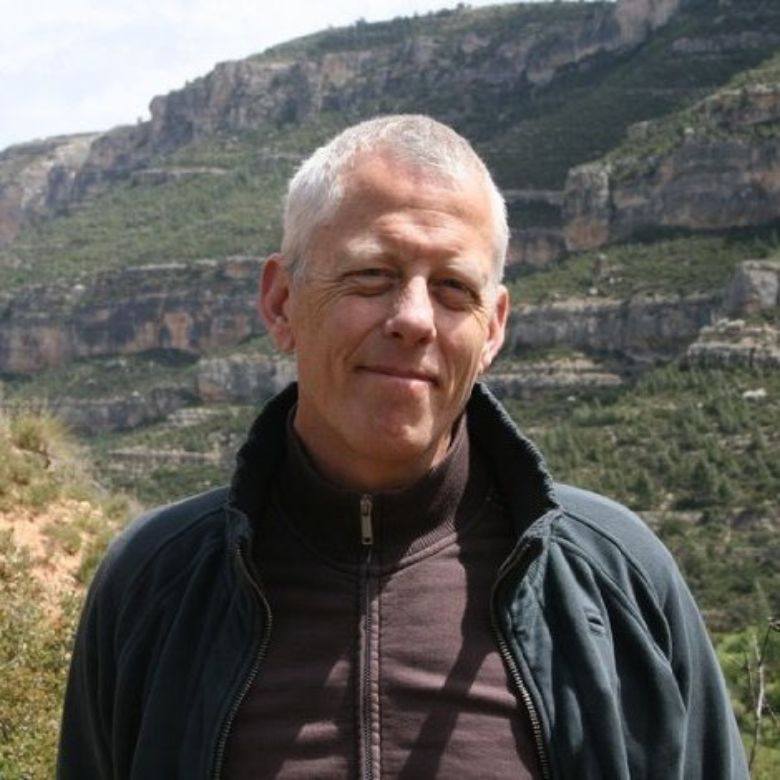
Matthew Carr is the author of three historical crime novels: The Devils of Cardona (2016); Black Sun Rising (2023) and The Emperor of Seville (2025).