
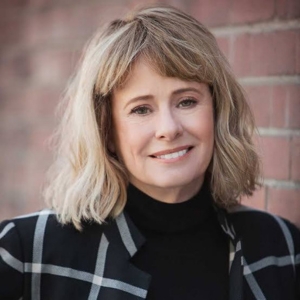
Welcome to Aspects of Crime, Kathy.
Thank you.
I’ll start with a sort of legacy question, let’s call it that. Déjà Dead came out in 1997, the first Temperance Brennan story. You’ve have written 24 novels in the series since, you’ve had a standalone novel, and, of course, you’ve got the Viral series as well. And you’re an academic, a forensic anthropologist. I just wonder, are you aware of how much you must have inspired people over the years?
I just hope they read the books and enjoyed the books and, you know, they found it a good story. But that’s nice to think. It’s nice to think that young people, especially little girls, would aspire to something more than they might have otherwise.
Yes, I think you’re right. I mean, one thing about writing is that it’s nice to inspire people to know that they can write. But, of course, when you were doing this, when you first started, there weren’t many people writing about forensic anthropology. So it also inspires young people to take up science as well.
I hope that’s true. Yeah. And I love being able to work both sides of the brain, right side, left side. Science being very analytical and then the writing being creative.
So the two marry well together then?
They did for me, yeah.
I wonder, have you noticed how your writing has changed over the years? I don’t just mean you got better at it, I mean, obviously experience makes you better, but in more artistic terms, perhaps.
I use a lot less adverbs, I think, which is better, definitely. It’s hard for me to say. So many people like the very first book that I was a little fearful of departing from whatever formula I had used for that book.
Yeah, why fix it if it isn’t broken. I suppose you’re too close to it, so it’s very difficult to know, because for you the changes are gradual, aren’t they? It’s not like you can see things happening.
Right.
What about the science then? Is it the real world that inspires you, the cases you come across or is it research?
It’s both. It’s everything. I think that’s probably true of every writer, unless you’re writing about outer space or something. But yeah, I see things in the news. I go every year to the meeting of the American Academy of Forensic Sciences. And that has, I forget how many sections, 9, 10, we’ve got a new one on digital. So I interact with colleagues in all of the different areas of forensic science, fire and arson and DNA and criminalistics, anthropology, dentistry, pathology, whatever happens to be the focus. And I cruise around like a hound dog with my nose out sniffing for ideas. And I go sit in on papers in areas that I would never do casework, but I love getting ideas from all of those different sciences.
I suppose, with the books being on forensic anthropology, that you’ve got to be up-to-the-minute, you’ve got to be on the cutting edge. Things have changed, must have changed, dramatically over the years you’ve been writing. How relevant is that?
Certainly, forensic sciences have changed. The big gorilla, of course, is computerization and DNA. Back when I started, we really didn’t have that. So yeah, you do have to keep up. Anthropology itself, because we’re looking at the skeleton, I cruise around like a hound dog with my nose out, sniffing for ideas. we’re looking at bones, our technology isn’t, you know, that whiz-bang, sophisticated or complicated. We use computers and we use x-rays. We might do some biochemical testing. So certainly, you have to know what’s new and what’s out there and what’s going on out there. But I don’t think it changes as rapidly as some of medicine, for example, or pathology or some of the other sciences.
Right. What about the idea of explaining tech in a book? Because obviously the thing is to keep the story flowing as a thrilling read. You know what people want is the excitement, they want the suspense and everything else. Is it ever difficult to do that, to kind of make sure you explain something properly, but at the same time keep the balance f information and story, keep the flow?
That’s a challenge because you don’t want to dumb it down. And I try to use a different aspect of forensic science in each of the books. I don’t want to just do bones after bones after bones or DNA after DNA, you know… So, I try to use something new in each of the books. And I think it’s like addressing a jury. You want to make the science understandable. And you don’t want to use a lot of the jargon that we use amongst ourselves as specialists. And you want to make it entertaining. You want to keep the reader’s attention. So I think it’s kind of the same skills in testifying for a jury of laypersons who don’t know anything about your science.
Yes, I never thought about it like that, of course, yeah, you would have to do that in a courtroom, wouldn’t you? To explain it to make sure it was clear to people who didn’t know what the science was. What about then, you’ve been living now with Temperance for three decades, very nearly.
Yikes, make me feel old! (laughs)
Sorry. I’m just wondering though, really, what’s it like, to be that close to Tempe?
I’ve certainly gotten to know her, and I’m constantly looking for new things about her. Really creating new things or revealing new things about her in each book, because you don’t want the same old thing book after book after book. So, it does become a little more challenging, but I think I know her very well. I certainly know her sense of humour, which is very similar to my own, I’m told. She’s a bit more impulsive, not compulsive, but impulsive than I am. Less so in later books, but certainly in the early books, she did some kind of dumb things. But she’s very passionate about her work, about finding names for the nameless and giving answers to families about lost members.
Yeah, and you also have a wider group of characters who regularly appear regularly, so it’s not just about Tempe.
The recurring characters such as Andrew Ryan, [Sureté du Québec officer, romantic interest], and Skinny Slidell. I think my favourite character to write dialogue for is Skinny Slidell, [a cop who often clashes with Tempe, his misogyny creates a tension in the novels] He’s a lot of fun. And then her sister, her mother. Yeah, there are those, and then in each book, you have to bring in new characters as well.
Yes, of course you do, it keeps it fresh. You’ve got the Viral series too and you’ve got the TV series that ran for, oh crikey, 12 years, something like that. It was 12 series, wasn’t it? They are both collaborative projects, does that help to keep things fresh?
Oh, I think so, yeah. And I think the Viral series, of course, is very deep background for Tempe, she’s the great-aunt of the main character, Tory Brennan, who’s 14 years old.
Yeah, the TV show Bones has a huge audience, maybe some are the same people who buy the Tempe books but Viral is different it is aimed at a different audience.
Yeah, the Viral series was meant for young adult, but a lot of adults read young adult. I hear from a lot of adults and meet them at my public events who read the Viral series.
Really?
Yeah, which I didn’t know. My son, Brendan Reichs, also writes for younger readers, well, he’s writing adult now, but he wrote two or three young adult series, including The Dark Deep. So it’s a different audience, but a lot of adults also read young adult. I think the structuring of the stories is similar. With young adult books, they want their money’s worth. It was a lot of fun. The first book in the Viral series was actually my son’s idea. He’s a lawyer and he practiced for two years, I think. And he hated it. He loved law school, but he hated practicing law. So he came to me and said, let’s do a young adult series. And I said, sure, let’s try it.
What was it like then? How did it work as an experience? Because of course, by then you’d been writing books successfully on your own for some time.
At that point, and occasionally when he’d not like one of my editorial comments, he’d look at me and he’d go?? Then: Yeah, but I guess you’ve written 26 books. And this is my curse.
Makes sense to me.
It worked well. We were able to take off our mother and son hats and put on our co-author hats. And, you know, we did six books.
Yeah, absolutely, successfully too. And what about the television then? Because that is a far more collaborative process, in the sense that a lot of people were involved in bringing Bones to the screen.
Yes, and I really enjoyed that. We had a staff of six or seven full-time writers, and then, by writing guild rules, you had to have three freelance spots for each episode too. So, I wrote some episodes in that capacity. That is really fun because when I write the novels, I sit, as I’m doing now speaking to you, by myself in my office alone. Maybe the cat keeps me company here on the desk, but you’re by yourself and you’re just at the keyboard hammering it out. Whereas for television, when you’re writing an episode, at least the way our show worked, you did what’s called breaking the story. And you would go into the writers’ room with all of the writers available, some had to be on set if their script was being filmed. But you would just hammer out ideas and you just brainstormed together. And you’d start out with a blank whiteboard. And for our show, it was divided into six sections, our show operated in six acts. You just throw out ideas. And it was similar to the books also, in that you would have the A story, which is your main story, which would be your crime and then you’d have a ‘B’ story, which is something going on in the lives of your characters. And then you might even have a ‘C’ story, which could be an arcing story that carried over from episode to episode or even season to season.
So yeah, you’d start out and the board would be empty but by the end of maybe two weeks, you’d have a complete scribbled outline and then you’d have to pitch that. This was very different from the books. The books, I would have an idea and I would say, yeah, I want to do this and take her into the world of fire and arson or, you know, whatever. And they’d say, ‘yeah, fine, go ahead.’ And I’d write it and then turn it in when it was complete. But writing for television, for Bones at least, you had to pitch your idea and you’d do the outline and you’d pitch that and the showrunner would sit there, it was kind of like you were defending your thesis. And then he’d give you notes, and you’d go back and change things, and then you’d submit it again, and eventually it was approved. And then, then they would change everything, for reasons you didn’t take into account as a writer, probably because of financial reasons. You might have something that’s going to cost a billion dollars, you know, and require stunt actors.
You need a 40,000 cast for that one, and we can’t do it, kind of thing.
Yeah, exactly, So, in fact, the one I wrote called The Dude in the Dam, [series 9]. I intended one thing and they said, no, we want you to start it out with two kids or whatever. I was going to have a massive crash. A plane coming down into this puddle of slime made by leopard slugs, because if you add water to leopard slug slime it increases by 99%. No, that’ll cost too much. We always had these openers where the body was discovered, so that scene got changed to two kids walking through the woods and they see a beaver dam and there’s a body in the beaver dam. So it was called The Dude in the Dam. What we didn’t know is that there were only three working beavers in LA and they were all booked. So it was coming down, time to shoot the scene with the beaver and the beaver dam. And anyway, it was close but we finally got a beaver. I don’t know, there was a contract dispute or whatever. Anyway, a beaver became available. So, all was well.
The things that happen on TV!
The episode starts out with a tight close-up on the beaver and kind of pans out and you see this whole river with the dam.
It does sound like a lot of pressure, but it also sounds like you did have a lot of fun doing it.
Oh, we did. We did. Yeah, I’m not one of these writers that will say, they took my art and they, you know, destroyed it. I had a great time. Our showrunner, Hart Hansen, was fantastic and working with David Boreanaz and Emily Deschanel. She is the kindest, nicest, most generous person on the planet. So, it was a lovely experience.
What about the writing experience, I mean the books, now. As you said, you’re on your own. It’s a different thing. Do you have a set process?
Yeah, I do. Not every single day, if I’m away for touring or for whatever reason, I miss it and I want to get back to it. I guess I used to never be happy because when I’d be writing I’d get called into the lab for a forensic case, I’d think, well, I, you know, I’ve got to finish this novel. But then if a couple of weeks go by and I didn’t get called in to work, I’d think, well, what the heck? Why, why aren’t they getting me in? There was no pleasing me.
I suppose that is one of the really difficult things, isn’t it? Balancing two careers like that.
Yeah. And being a mother, you know, in the very early days and I was also teaching full time university. So, I was teaching university and commuting between Charlotte, North Carolina, and Montreal in Quebec, doing forensic casework, you know, and raising kids. So, yeah, those were the busy days.
You haven’t exactly packed up and gone quiet now, have you, to be fair.
Oh, no, I’m still working, still writing.
Let’s talk about the new book then, Evil Bones. Tell us a little bit about Evil Bones please Kathy. Let’s start there.
Oh, I think of this, I have nicknames for all my books, and I think this as my animal book. And in each of the books, I’ve tried to, as we used to say in the writer’s room, bring the reader, the viewer, the reader in this case, into a different world. And this is the world of veterinary forensics and animals. So, the story starts out with an old lady driving along and she goes off the road and crashes into a tree. I forget why, it’s raining and she looks up and we don’t know what is that she sees, but it’s shocking. That’s what we would call a cutaway in television.
We know she’s deeply disturbed by what she sees.
Yeah, she is very disturbed by this. Anyway, so that’s the first discovery of remains. And it’s a situation in which, as it turns out, initially our villain is killing animals and displaying animals. But of course, the fear is because he’s going on to bigger and bigger animals, from a squirrel to a rabbit to a dog. Will that person become dissatisfied with that and escalate to human victims? And of course, that’s what happens.
Yeah, but not instantly in the book. You know, things as you say, build up. The point is this escalation. And it’s what we actually don’t very often see with killers in books, the build up. And you actually did that. Told a more rounded story about a disturbed killer.
Yeah, and the villain is deep background. The villain in my stories may be there the whole time, but you don’t know too much. You don’t know until the climax in the very end.
Yeah. What about Tempe’s motivation then for taking this case, taking it on so early then, let’s say, because it is before there’s a human body?
Yeah, I mean, it’s also the thing we all have about animals as well, isn’t it? You know, it’s not just the thought about escalation. Tempe feels very compassionate about animals. She is very passionately against the abuse of animals or ill treatment of animals. So, this strikes her particularly close to her heart because of that.
And one of the things you do in the book, explore this whole idea, I suppose, of the sense of evil. And human beings, whether we may be the only species who actually are evil in a sense, or could be. If we consider that it’s something that is talked about in the book. Are humans the only species capable of evil?
I don’t know. That’s a tough one. I’m not sure that I do reserve that for us alone, having studied primates way back in the day. Primates can do some things that we might view as evil, killing others.
Possibly even go to war.
Yeah, grab their baby and kill it or eat it, yeah. So, but we’re the ones that put a word to it and define it.
Yeah, I’m curious about the fact that we rush to judgment and we put a word like evil on an awful lot of things. But an evil act is something very specific. And murder isn’t necessarily evil. One of the characters says in the book that if it’s done in rage, if it’s done on the spur of the moment like that, it’s not necessarily an evil act. It has rage that built up in it, it’s not premeditated or thought through. And it has an explicable reasoning for it.
And yet then there are the situations where it is premeditated and planned, and the perpetrator who does the killing draws some sort of satisfaction or even joy or sexual enjoyment out of the killing. That is very different from what you described, just someone loses it, they just flash anger, kill in anger.
Yeah, and it’s all there in the book in the sense that we don’t know what the motivations are. We don’t know where the character is coming from. As you said, the character is in the background. But as readers, we get to explore these issues, I suppose.
Yes, I think so. I think that. I hopefully write books that will give people pause to think that there are things that are said in those books, things that are done in those books that they consider and don’t just breeze through. I mean, the thought, the long-range goal is to write a good story, but hopefully there is a bit of a moral dilemma in there as well.
Yeah. I mean, I suppose that’s a point. It’s like part of the book is to explain something scientific or to have a scientific issue going on. You know, there would be something related to the crimes, or the body, whatever it is that goes on, that you are particularly qualified to present to us. But at the same time, there is always this moral issue somewhere in the background, in terms of human behaviour, how we are and setting matters too.
This one’s set in Charlotte and close to home. And other novels have been set in different places. Quebec, obviously, because there’s the two places that Tempe works. But I mean, for instance, I was thinking The Bone Hacker is actually set in the Turks and Caicos Islands.
We’re curious about the two home bases for her and what that’s like. How that relates to your own experience. I mean, is that what gave you the idea in the first place, having her in the two places?
Yeah, they say write about what you know. That’s what I did for over thirty years back and fore, not so much now I’m retired, but I commuted between Charlotte, North Carolina and Montreal. It started out as something called National Faculty Exchange, where a member of a university on one end exchanges places for a year with a faculty member at another institution. So, I had just taken a course in French. I just felt that an educated person should speak another language. So I took French 101, Je m’appelle Kathy. And then this thing came across in a faculty meeting about the NFE, National Faculty Exchange. And there was someone in Montreal wanting to come to my home institution. And I thought, mais oui, I speak French, right? So off I went with one semester of, you know, undergraduate French under my belt. And yeah, that was the initial impetus for going to Montreal. And I taught at Concordia and McGill Universities up there and worked at the lab – the Laboratoire des Sciences Judiciares et de Médecine Légale, which is the main coroner, medical examiner, and crime lab for the whole province.
So is there a difference here? working with the American police and the FBI, perhaps, and in Montreal, it would be working with Canadian police.
Well, you know, I didn’t see that much difference. Working with homicide detectives is mainly what I did. I’d work with cops who were homicide detectives. And I didn’t go out with anyone like Andrew Ryan to investigate crimes, but I would go to interrogate witnesses and that kind of thing. Tempe gets much more involved than I ever did. And that’s a bit unrealistic. But I did work with cops a lot, on both ends in North Carolina as well as in Quebec. And I don’t know, to me, they’re very similar. They’re very pragmatic, nose to the grindstone, leather hitting the pavement, kind of people. Yeah, also on the other hand, they’re not all the same, they vary, just as any profession would vary in terms of the personality of the cops. But, it’s just fun to write a character like Skinny Slidell or Luc Claudel a kind of counterpart of him up in Montreal. And so I enjoy that. I enjoy writing the dialogue, the repartee between Skinny and Tempe or Claudel and Tempe.
What about moving around locations then? The Bone Hacker, that was set in the Turks and Caicos. As I said, other stories have been set in other parts of the world. Does that sort of help to keep it fresh?
I think so. And it also gives me travel opportunities that I can write off for tax purposes. Ha! There’s a book set in the Northwest Territories up in Yellowknife. That’s based on work I did, forensic work I did in Yellowknife. I was there for a book conference, I think. And that was a really interesting place. So I thought, well, I’m going to set stories where I go if it’s somewhere interesting. Then I’m going to send her there as well. So she’s been, you know, to the Northwest Territory. She’s been to the Turks and Caicos, Guatemala. Yeah, In fact, the TV show, if you’re a very dedicated viewer, the very opening, the pilot, Angela, is in the airport waiting for Tempe to get off of her flight returning from Guatemala.
I read in the book, a reference to support for people who work on dark stuff, you know, this sort of psychologically damaging stuff, at least potentially. And I think the reference was something like, there was support there for 9/11, but it’s not always there. I mean, what is that like, then? Because I suppose you’re connected, indirectly at least, in a lot of dark stuff.
Yes, I think that’s true. I know for 9-11, I was at Ground Zero part of the time and out at the landfill in Staten Island part of the time. And there would constantly be preachers and psychologists, therapists, counsellors wandering through and looking deep into our eyes to see if we were losing it kind of thing. You didn’t really have that normally. You did for 9/11. It was available both when you were entering and when you were leaving. Yeah, so that was available. But on a normal day-to-day doing your casework, you better have a certain psychological makeup to be able to do that. It’s not for everybody because you are working with death and you’re working with violent death. You’re not working with people who usually died of natural causes, your accident, suicide, homicide, you know, you’re looking at violent death. So, it does take a psychological makeup to be able to do that over and over and over.
I can imagine. I mean, I don’t know, obviously, I don’t have that experience. Does it affect your view of humanity?
I don’t think so. I think we all know what people are capable of doing. All you have to do is turn on your computer or turn on the television, your radio, pick up the newspaper. You know, people are capable of doing atrocious things to other people. So the difference is, you know, working in a medical legal lab and being present at autopsies and seeing remains, you see it up close and personal rather than just hearing about it or seeing it in the nightly news.
Yeah, I see that makes sense. What about then, is it, is there a form of catharsis in actually writing the books or is it not connected, you know?
I don’t know, you know, I’m often asked that question and I don’t think so. That’s certainly not why I wrote the first book. We can talk about why I wrote the first book, which is nothing glamorous. very practical. But no, I don’t think I had this, oh, I’ve got to get this down on paper and get it out or get this down or whatever.
Handwriting or computer?
I can’t imagine writing by hand or not writing with a computer. You know, in the old days when people used typewriters and I can’t imagine doing that.
Yeah, you don’t even need to type or anything these days. You can just talk to your computer if you really want to now.
I tried that. I don’t know what book it was. I tried it, it’s not for me, because I’m editing constantly. I’m constantly going back and changing a word or shifting a paragraph constantly as I write. So that didn’t work for me. Stephen King once said to me, get it down, get it on paper, do it quickly, stick it in a drawer, go away from it, and then come back and look at it, you know, a month later or something like that. Yeah, that’s just not the way I write.
I think that makes sense. Going back to a radio interview you did some years ago in this country, I think you were talking about CSI and the instant DNA results. Somebody raised this point that it happens like that on TV shows. On TV you can have instant answers. You can have DNA ten seconds later. You can have answers to questions about blood results and all sorts of things. And they just happen on the spot. And you were explaining that isn’t really the way it works in the real world. Is it still the same sort of thing?
Yeah, and it’s not that the test takes all that long, like DNA testing. It’s like anything else, it gets quicker, cheaper, smaller. But you’re waiting in line. That’s what takes forever is the queuing for your turn. And Tempe always figures out a way to get them to bump her to the front of the queue so she gets her results quickly. She’s good at that.
She’s very good at that. But the other thing, I suppose, is budgets as well when it comes to that sort of thing, because there’s only so much in the way of budgets for cases, isn’t there?
Exactly. Yeah. You’re not going to do every full spectrum of tests and DNA on every case.
With the work you do then, And maybe writing about it, stuff coming up in the books, you said it’s not cathartic, but has it changed any beliefs or assumptions around life, religion? I don’t know, the way you work. It’s kind of a weird question, I suppose.
I don’t think so. I think when you’re dead, you’re dead. And I’ve seen so much physical evidence of that and so many ways that people die and kill each other that I don’t think that has changed my view very much.
And disconnecting it, because you don’t want to talk about the plot, but disconnecting it from that, you introduced something called ‘provocative taxidermy’, which I’d never heard of before until this thing came up in the book. And I looked it up and it’s even more provocative than I thought it was actually.
I think I had the same experience. I thought, does this exist and you Google it? Oh, geez, it does.
You know what I kind of first thought of? You see these sort of ancient creations where they’ve put a bird and a fish together and tried to invent a creature. And it was just one of those weird things that they did in past times. And I had that in mind, but it’s more than that. I’ll leave it to people to look it up for themselves if they really want to know more about that extreme taxidermy. What’s next then?
I’m not sure. The book Evil Bones is the final book for which I’m under contract. So I’m free now to do whatever I want, to write a book or not write a book. And if I want to write, you know, a different kind of book. And I think my publisher would be good with that. So I’m on a hiatus right now. And I don’t know. We’ll figure it out.
Okay, so there’s no reason to assume there won’t be another Tempe book if you feel like it, but it really now depends on whether you do feel like it or not.
That’s correct, yeah.
Okay, we’ll look out for that then. Whatever is next. Yeah. Do you have other ideas?
I do. I do. And I’m still writing things. I’m currently writing a short story for Crime Spree Magazine. You know, so I’m constantly doing the what if this? What if they found this? And then what if thist? What if that? Which is how I kind of spin it into a story.
So contracts all the way?
Except for the first one. The first one I just wrote that purely spec, as we would say, for a script. And just hoped someone would publish it and then hoped someone would read it and like it. After that, I signed, I don’t know, first a two-book contract and then I think a five book contract and then two and three along the way, two book, three book, whatever.
Yeah. Was it because the first one was a hit that it sort of meant that you knew straight away that it was going to be a series, it was going to follow?
Well, I didn’t even know if anybody would publish it. I went about getting published in a ridiculously naïve way when I finished writing the manuscript and I didn’t tell anybody I was writing it because, you know, I was teaching in a science department and you’re not supposed to be writing novels. My daughter knew somebody who knew somebody who knew somebody at a publishing house. And so I said, find out, who and where. And it turned out it was Marysue Rucci at Scribner, who now runs her own publishing house, whatever you call it, imprint. So, I just sat down and wrote a cover letter. And in those days, you submitted hard copy, and I just mailed the thing to her. And I’m sure she was on the other end of this, hearing that her friend’s friend’s friend’s mother’s had her first novel coming her way. She told me later that she took a few chapters, I think, home with her from her office in Manhattan to where she was living. out in, I think, New Jersey, and read them, and then went back in, got the rest of it, read it over the weekend, and then she handed it up to Susanne Kirk, who ended up being my editor for several books, and then the rest is history.
Yeah, and you need to have that relationship with an editor, don’t you? It’s really important to have that kind of trust.
Yeah, yeah. And your agent too, in those days. I don’t have an agent currently, but in those days, I think everybody had, I know publishers have told me they don’t even look at works that are not represented by an agent.
Yeah, there is a lot of that now, isn’t there? Who do you like to read?
Oh, I read all over the map. I’m reading something right now called, I think it’s called Theo of Golden [Allen Levi]. I don’t know what you’d call it. It’s not a mystery. I read just about everything except romance, it’s not really attractive to me. There’s nothing wrong with it and I’m sure they’re great writers and artists, but it’s not my favourite. I can’t remember what I’ve got stacked up here. I’ve got something by Fredrik Bachman called My Friends. That’ll be the next one that I move on to. So it might be a thriller. I do read a lot of thrillers because I want to know what’s going on out there. So I don’t get 200 pages into a manuscript and find out that Harlan Coben just entered that same world.
Yeah, it just changed the game or something.
Yeah, So I do try to keep up with what my colleagues are doing.
Oh, I can see that. That’s been great. Thank you very much, Kathy.
Oh, well, thank you so much. It’s been a pleasure.
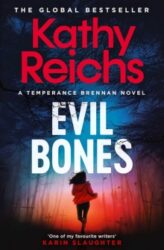
You can find Kathy’s latest book here.