
There has long been speculation about the real-life inspirations behind James Bond. While Ian Fleming undoubtedly gave 007 many of his own attributes and eccentricities, Bond was ultimately a blend of many people.
Possible candidates include Sidney Reilly, the enigmatic ‘Ace of Spies’ who attempted to overthrow Lenin’s Bolshevik government in 1918; Lieutenant-Commander Patrick Dalzel-Job, an Arctic explorer and member of 30 Assault Unit, the intelligence commandos Fleming established; and Wilfred “Biffy” Dunderdale, an MI6 officer and friend of Fleming’s who combined charm with a ruthless edge in what he described as a 40-year career of ‘licensed thuggery’.
However, two people stand out as having had a clear influence on Fleming’s hero, with Bond combining the nerve of the suave gambler and double agent Duško Popov with the daredevil action-hero qualities of Royal Navy frogman Lieutenant-Commander Lionel ‘Buster’ Crabb.
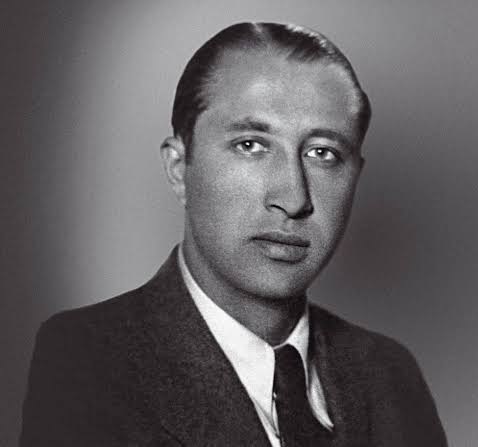
Duško Popov was a debonair Yugoslav double agent, a gambler and bon viveur who used his playboy lifestyle as cover while passing false information to the Germans on behalf of British intelligence.
In August 1941, Duško Popov informed J. Edgar Hoover, Director of the FBI, of intelligence suggesting that Japan was planning an attack on Pearl Harbor, but Hoover disregarded his warning. He later played a key role in the Double Cross System and in supporting Operation Fortitude South, the Allied deception plan designed to convince Hitler that the D-Day landings would take place in the Pas-de-Calais rather than Normandy.
Fleming encountered Duško Popov at the Casino Estoril, near Lisbon, in 1941, where he watched him play baccarat. Popov had been offended by the arrogance and bad manners of the banker, who had broken casino etiquette by setting unlimited stakes. In response, Popov calmly placed a stake of $50,000 on the table, an astronomical sum at the time, breaking the bank and humbling his opponent.
Fleming was deeply impressed, and the incident is widely believed to have influenced the plot of his first Bond novel, Casino Royale. Legend also has it that, during this period, Fleming played a game of chemin de fer with German intelligence officers, an experience that may likewise have helped inspire the novel.
Lieutenant-Commander Lionel ‘Buster’ Crabb met Fleming in Gibraltar in 1943, where he was serving with the Underwater Working Party (UWWP), an improvised unit tasked with defending Allied shipping from underwater attacks by Italian naval commandos of the Decima MAS and enemy saboteurs.
Crabb was awarded the George Medal for his role in rendering safe mines placed on vessels passing through the harbour and Bay of Gibraltar. The UWWP saved countless lives and helped preserve vital Allied shipping during the campaign.
Crabb’s exploits can be seen throughout Thunderball. The most famous example was the Olterra, an Italian merchant vessel interned in Spain and secretly converted by the Decima Flottiglia MAS into a forward operating base. From a concealed hatch below the waterline, Italian naval commandos launched human torpedo attacks against Gibraltar. Fleming borrowed the idea for Thunderball, where the Italian villain Emilio Largo’s yacht, the Disco Volante, was equipped with a similar underwater trapdoor. Crabb wanted to attack the Olterra, but permission was refused; Bond was not constrained by such niceties.
‘Buster’ Crabb was also involved in one of the most enduring controversies of the Second World War. On 4th July 1943, a Liberator carrying General Władysław Sikorski, head of the Polish government-in-exile, crashed into the Mediterranean shortly after taking off from Gibraltar. Crabb and the UWWP were tasked with recovering secret documents from the wreck. Although the documents were saved, the cause of the crash has never been fully explained.
Fleming drew on a similar premise in Thunderball, where a bomber mysteriously disappears over the sea and Bond is sent to investigate its fate.
Popov and Crabb also shared Bond’s appreciation of a “good solid drink” and a lively social life, traits they also shared with Fleming himself. Many of Fleming’s own tastes and opinions found their way into Bond, particularly his attitudes towards women, his fondness for sports cars, cigarettes and fine cuisine. Both men were also naval intelligence officers.
Most Fleming biographers regard Bond as, at least in part, an idealised version of his creator. Fleming himself acknowledged that Bond had inherited many of his tastes and characteristics, while describing 007 as a composite of the wartime secret agents and commandos he had known.
Alan Bardos is a novelist and the author of Hunter Class, the second in the Daniel Nichols Spy Thrillers series.