
There is a moment in Lawrence Block’s Hit Man when Keller, a professional assassin, pauses mid-contemplation of a stamp album to calmly plan his next kill. In that seamless transition from philatelist to hitman, a quiet, unsettling realisation dawns on the reader: we are rooting for him. From the Jackal’s cold efficiency to Amy Dunne’s meticulously vengeful scheming, the genre has increasingly blurred—if not erased—the moral lines that once separated protagonist from villain. Yet the criminal protagonist is no modern invention. The compelling question is not whether we sympathise with those doing terrible things, but why—and how writers, from Patricia Highsmith to Frederick Forsyth, have engineered that sympathy through radically different narrative techniques.
Not all anti-heroes work the same way. Some are pure professionals—we don’t sympathise with them so much as respect their competence. Others are ordinary people who slide gradually into criminality. Some are psychopaths who nonetheless charm us with intelligence and charisma. Others compartmentalise their criminal life so effectively they seem like neighbours who happen to kill for a living. Then we have the “circumstantial criminal.” Maybe they started out like us, and little by little they cross the line. These are often cops, as we’ll see.
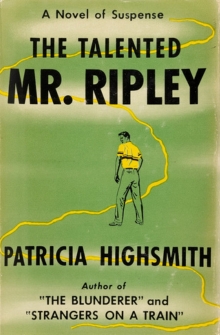
The modern anti-hero in crime fiction finds its template in Tom Ripley. In spare, unemotional prose, Highsmith takes us inside a mind devoid of empathy. She understands that we don’t need to like someone to be fascinated by them. At the heart of Ripley is a disconnect:
“They were not friends. They didn’t know each other. It struck Tom like a horrible truth, true for all time, true for the people he had known in the past and for those he would know in the future: each had stood and would stand before him, and he would know time and time again that he would never know them.” — The Talented Mr Ripley
Rather than making him an object of pity, Highsmith makes this absence the heart of his personality. That allows us to respect his taste—“He loved possessions, not masses of them, but a select few that he did not part with”—and intelligence. But what keeps us hooked is his self-awareness:
“He could say he hadn’t wanted to do them, but he had done them. He didn’t want to be a murderer. Sometimes he could absolutely forget that he had murdered, he realised. But sometimes—like now—he couldn’t.”
“Psychopath” is an overused term, but Ripley perfectly fits the definition. He’s utterly charming when it suits him – Dickie Greenleaf thinks he’s the greatest guy in the world, right up until Ripley murders him. There’s a grandiosity to Ripley’s ambitions that he won’t let conscience stifle.
How can the reader go on that journey with a man like Ripley? Crucially, although Ripley kills when it suits him, he doesn’t take pleasure from the act itself.
“Tom detested murder unless it was absolutely necessary.” — Ripley’s Game
Highsmith’s narration is the key to understanding why we don’t recoil from a psychopathic killer. She never judges him; she tells us what Ripley does, and what he thinks, but never nudges our responses. She gives him charisma: intelligence, taste, purpose and dynamism. And by tying us in so closely through interior monologue, the monstrous becomes normal, logical even: “The thought of going back to Mongibello alone, of seeing Dickie with Marge again, made Tom feel the absolute necessity of doing what he had vaguely planned. He had to kill him.”
A more contemporary slant on the psychopathic criminal is Amy Dunne, the protagonist of Gillian Flynn’s Gone Girl. She dominates the novel despite sharing the narrative with her husband, Nick, because she is such a magnetic presence. Unlike Ripley, Amy’s story is first person, so we’re inside her head from the start. Often we’re reading her diary. Her intelligence and articulacy seduce us from the start, and when she lists her grievances against Nick, we believe her. And we admire her agency, we sympathise with her problems, and we’re signed up to her revenge.
It’s only as the novel unfolds that we realise we’ve been manipulated, and by then we’re complicit.
“Being the Cool Girl means I am a hot, brilliant, funny woman who adores football, poker, dirty jokes, and burping, who plays video games, drinks cheap beer, loves threesomes and anal sex, and jams hot dogs and hamburgers into her mouth like she’s hosting the world’s biggest culinary gang bang while somehow maintaining a size 2, because Cool Girls are above all hot. […] Cool Girls never get angry; they only smile in a chagrined, loving manner and let their men do whatever they want.” — Gone Girl
That’s the famous ‘cool girl’ monologue. It’s dark and sharp, but above all it’s funny; humour is one of the ways Amy disarms us. It’s only later, when we realise she’s framed Nick for her murder, that we see the emotional blankness underpinning her life. She has no conscience and no remorse. There’s no doubt Nick deserves what he gets—in his own way he’s as monstrous as Amy—but that doesn’t justify her actions. And yet surely every reader admires her cleverness, her ruthlessness and her practicality. She may not fit the criminal stereotype, but she’s just as competent at executing a plan.
Less read these days, but more versatile, Donald E. Westlake brought a blue-collar sensibility to the second half of the twentieth century. Under his Richard Stark pseudonym, he created one of the great anti-heroes. Parker—a first name would be ostentatious—is a career criminal with few virtues and fewer vices. He’s violent when he needs to be, but never for its own sake.
“It was dangerous to kill when there wasn’t enough reason, because after a while killing became the solution to everything, and when you got to thinking that way you were only one step from the chair.” — The Man with the Getaway Face
Over 24 novels, we never get a backstory and, in contrast with Ripley, almost no time inside his head. The prose is stripped down, functional, efficient: a deliberate reflection of the protagonist. Even more than Ripley, with his surface charm, Parker is hard to like. “The office women looked at him and shivered. They knew he was a bastard, they knew his big hands were born to slap with, they knew his face would never break into a smile when he looked at a woman.” (The Hunter). It’s a close-up of a professional in action. Many of the Parker novels are heists, and we have a ringside seat watching a master at work.
“Stegman looked back at him. ‘I don’t see no gun,’ he said. ‘I don’t see no weapon.’ Parker held up his hands. ‘You see two of them,’ he said. ‘They’re all I need.'”
Westlake manipulates our engagement with terse third-person prose, focusing on process over personality. The essence of any heist novel is that you want the heist to work, even though you know it won’t. The same author inverts nearly all the Parker tropes in his Dortmunder novels. They’re also heists but seen through the eyes of the comic and hapless protagonist. Unlike Parker, he’s warm, likeable and vulnerable, and everything goes wrong, usually in unpredictable and humorous ways. Westlake gives us an underdog who can’t catch a break, a likeable ensemble cast, and low stakes.
Westlake’s contrasting crooks show that the reader can engage with them through respect or affection. And in both cases the crimes are against institutions rather than individuals, so there’s no victim to connect with.
Imagine a novel in which you don’t know: the protagonist’s name; his background; his motivations; anything about his interior life. And you know from the outset he won’t succeed. It’s all but impossible to see how this can work. But it’s the basis for one of the most gripping thrillers ever written: Frederick Forsyth’s The Day of the Jackal. All we’re told is that he’s the best at what he does, and he’s been hired to assassinate French President de Gaulle. What we know about the Jackal’s character is unlikeable. So how does Forsyth pull it off?
The focus is not on the Jackal’s personality. Instead we see his methods, his meticulous planning, his ability to improvise, and his cold-blooded professionalism.
“He was a man who operated alone, and he preferred it that way. He was a craftsman, and he took a craftsman’s pride in his work.”
The reader gets the sense that Forsyth has got the details right. Every element is believable, and although we see inside the heads of the French police trying to stop him, the novel comes alive when we’re with the Jackal, sourcing the rifle, calibrating the sights, and staying one step ahead of the authorities.
It’s overstated to say we sympathise with the Jackal. There’s not enough inner life to engender sympathy. But like a magic trick, we’re observing the mechanics so closely we don’t step back to see how we’re being manipulated. The technical detail substitutes for emotional connection.
We’ve met Lawrence Block’s Keller – an ordinary man with an ordinary life, who just happens to have an extraordinary job. “It was nice, the contrast. The deadly work, the domestic routine.” (Hit Man). He worries about his craft, particularly in the later books when things start to unravel, but he also worries about real estate, groceries and ageing. Of all criminal protagonists, Keller might be the most relatable. Block ties it all together with a wry humour which makes us complicit:
“I do feel sometimes that I might be wasting a little of my life. But then I tell myself, well, we all are, aren’t we?” (Hit List) We might not be hitmen, but we can all relate to the sentiment. (Incidentally, expressed to his therapist before The Sopranos popularised the device).
Like Parker, Keller’s killings are presented with a matter-of-factness that not only avoids alienating the reader but speaks to the professionalism of the protagonists. But where Westlake plays it with brutal bleakness, Block always has a wink for the reader.
There’s a circle in anti-hero Hell for bent coppers. This is among the hardest tricks to pull off. Oliver Harris’ Nick Belsey is a great example, but my own favourite is Paul Winter, the co-protagonist of Graham Hurley’s Faraday and Winter novels. He’s there as a counterpoint to the by-the-book Inspector Faraday, but for me he’s the more vivid character. Winter’s arc is a tragic moral fall. Originally he’s a basically decent if unorthodox detective, but over the series he becomes more ensnared by the criminals he associates with, until he becomes gangster Bazza Mackenzie’s main lieutenant.
“You’ve traded a badge for a leash, Paul. You think you’re the one holding the lead, but Bazza’s the one who decides when you bark.” — One Under
Hurley never pulls the rug from under his feet—Winter survives, even thrives, in his new life. Where Faraday breaks under the pressure of being a knight in shining armour, Winter shows the moral flexibility he needs to stay alive. And the reader might not approve of his behaviour, but neither do they want to see him fail.
Paul Winter is perhaps the most dangerous and compelling anti-hero because he’s the most realistic. Hurley anchors him in the here and now, without any special competences or the distancing of humour. In a broken world, morality becomes a luxury and an obstacle. He’s the most human of flawed protagonists.
“Other people’s success was like that. It made you feel cast off.” — Turnstone
What all of these writers achieve is proximity. The trick is to keep the reader engaged, and so close they can’t step back from the protagonist’s perspective. Competence is compelling (the Jackal, Parker). If it’s paired with the mundane, that adds an extra layer of identification (Keller). Intelligence and taste make us side with the criminal over their pale victims (Tom Ripley, Amy Dunne); and the focus on a tragic arc, the turn to the dark side, pulls the reader along with them until we too have joined them there. Each writer engineers engagement differently—through competence, humour, intelligence, or tragic trajectory—but the effect is the same: we become complicit. And that complicity is precisely what makes the anti-hero endure.
Tim Stretton’s Barcelona Trilogy is published by Sharpe Books.