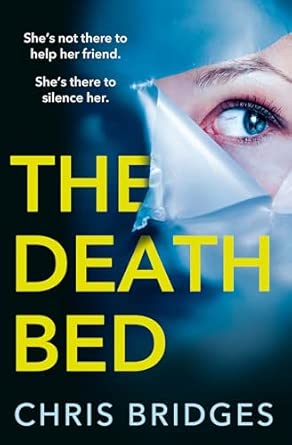
What bonds you and your friends? Hopefully it’s happy events, shared histories and supportive relationships. But we all have things in our past that we’d rather forget, usually benign. At the lesser end of the scale of unkind acts are friends who are reformed bullies, ex teenage shoplifters, or childhood vandals. But the world has a hidden layer and there are people in society who’ve done far darker things with their friends.

When I wrote The Death Bed I used the concept of friends who had collective culpability and guilt over a crime. I’m fascinated by the concept of people who decide to commit a crime together. I’ve often wondered how it evolves. It’s mind boggling. Are two perpetrators having dinner and decide to do something heinous over a cottage pie? Does the idea evolve slowly on a series of dog walks or does it begin with a spontaneous and frantic violent event? It’s a hard one to think through and like many things in life, I explored it through writing about it. Inventing characters and getting inside their heads is sometimes the only way I can try to understand the world.
I wrote about two nurses who were criminally culpable for a terrible act during their training and had reunited after a lengthy estrangement due to one of them becoming critically ill. The idea being that having to be together again and the poor health of one of the women would lead to things coming to the fore again. I know on a personal level (as a chronically ill former nurse) that illness can make intense emotions rise up.
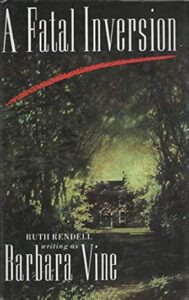
I had to flip back to the period when the two nurses first met and outline what exactly they did to one of their circle of friends. The issue with a past act is that it so often comes back to haunt you. Even more so if you’re not the sole perpetrator. A classic story about this is Barbara Vine’s psychological thriller A Fatal Inversion. A group of adults are living ordinary lives after having been involved in a crime when they were students spending the hot 1976 summer in a dilapidated grand house. Their reactions to the burden of their guilt is surprisingly varied. One is haunted by it; one barely considers it and has all but reconciled the act. Another character is triggered by an event in his current life. Guilt is a diverse thing but the thing that unites them is the act itself.
I would never have chosen to write a historical crime novel, mainly because I’m too lazy to do swathes of research. I had a friend who spent a year researching a book before she typed a word. But it turns out that I have written a historical story: I thought that the 90s, when my two nurses met, were a few weeks ago. They were actually thirty years ago: AKA the annals of history. I felt like life then wasn’t wildly different from how it is now but I couldn’t have been more wrong. I ended up spending hours doing research for a period I’d lived through, looking up clothes, music, drinks etc. The gift of that era was the lack of communication. How much easier for friends to have misunderstandings, missed connections and interference when you have no internet or mobile phones?
The thing about a crime between friends is that if you do something terrible and you aren’t alone then you’re not the only risk. The loose threads can untangle. You don’t just have to think about being quiet. You have the erratic behaviour of others to think of. Maybe you’ll need to work on keeping others quiet.
Nursing felt like an obvious choice for me. What better profession to choose to create people who would bond enough to be involved in a folie a deux. I was a nurse for thirty years and the friendships I forged with other nurses were powerful and vital. There’s a unique camaraderie when you’ve been through something awful with other people. As satisfying as I found my job, it did have a harsh side and there were shifts were you came away feeling like you’d been living through a stark drama, pounding with violence, pain and adrenaline. When I worked on acute wards it felt like anything could happen and it often did. The night shifts had their own strange atmosphere. You had the responsibilities of a day shift but it was also sinister and dark. There was often a kind of delirium which came upon people at 3am, when they’d be loose lipped and happy to confide in anyone or anything. And the only people who fully understood what it was like were other nurses who’d been there.
Nurses also see and do things that other people don’t. They’re frequent witnesses to the results of crime. All human life enters a hospital: drugs, violence, elderly people being defrauded. I’m sure there aren’t many nurses who haven’t cared for someone who was handcuffed to a bed or trolley with police escorts. There are things that I’ve seen as a nurse which I would be happier having not seen but I did see them and it was other nurses who helped me process it. Writing this book helped, too.
I haven’t ever considered a crime with my own friends. We’re more watching TV and talking non-stop kinds of people. We don’t have that kind of energy. My conclusion in writing about friends committing a crime together is a) don’t do it and b) if you do commit a crime, do it alone. That way you won’t have to face the consequences when your friend has a Damascene conversion and decides they must atone somehow. That’s the last thing you’d want to happen. You might have to take drastic action.
The Death Bed is published by Avon
The Death Bed by Chris Bridges